New Masters of Research Program! Stipends and project funding for domestic and international students

WSU Master of Research with stipend and research funding

Brand New Program launched Oct 2026

OPEN TO DOMESTIC AND INTERNATIONAL STUDENTS mid Nov 2026

Master of Research – new degree at Western – Science major

CLICK HERE TO APPLY

Join our lab for your Masters of Research with stipend and research funding!
Applications opening for new MRes program mid-Nov 2026

Domestic and international students are eligible!

website: https://www.westernsydney.edu.au/future/study/courses/research/master-of-research


Pathway to PhD or professional career where understanding research is important.

Western Sydney has just launched a brand new Master of Research Program which includes stipends and research project funding and is open to domestic and international students.

Duration: 1.5 years full-time (or part-time equivalent)
6-months coursework (40 CP): For a Science Major these subjects will include INFO7020 Research Design, Methodology & Literacy and NATS7061 Advanced Research Methods and Analysis. Both subjects provide training that is directly relevant to the research discipline and project.
- 12-months supervised research project (thesis): 80 CP with research funding

Internationally recognised: MRes is an internationally recognised HDR qualification (and AQF level 9); whereas BSc Honours is of limited and varied recognition internationally (and AQF level 8).

Start Date: 1 March 2027

Eligibility: Bachelor or Master’s degree (>65 average mark)

Application requirements: Transcripts (outside Western), Citizenship status, English proficiency, ‘Statement of Intent’, Letter of Support from primary supervisor.

Tuition fees: A fully postgraduate degree, the student is provided with a Commonwealth (RTP) supported place (does not contribute to HECS debt)

Scholarships: Will be available during competitive offers twice a year (first opening in mid-Nov 2026). Annual rate = PhD ($38,707/year in 2027).

Supervisor: email me to discuss project ideas: k.umbers@westernsydney.edu.au. Send a copy of your CV and a short description of your research interests and goals.

Several domestic PhD scholarships on Bogong moths available

In my lab we have several fully-funded domestic PhD scholarship available for a domestic student (citizen or permanent resident of Australia or NZ) to work with our wonderful team at WSU and the wonderful boarder network of people interested in looking after the Bogong moth. I am happy to consider students that are interested in any aspect of Bogong moth conservation science, especially their migration which includes breeding grounds, flyways and aestivation sites. First Nations Australians strongly encouraged to apply. This project is in partnership with Invertebrates Australia, Zoos Victoria, Xerces Society, and Lund University and in collaboration with DeadlyScience and the Australian Academy of Sciences. 

If you are eligible, and Australian or New Zealand citizen or permanent resident, contact k.umbers@westernsydney.edu.au 

ARC Funding sucess - The plight of the Bogong moth

Kate has been awarded over $1m AUD in the ARC’s new Industry Fellowship scheme. The four year project aims to determine the distribution and migratory flyways of the Bogong moth (Agrotis infusa)

Funding Announcement: https://www.westernsydney.edu.au/newscentre/news_centre/more_news_stories/western_researcher_secures_$1_million_in_arc_funding_for_vital_bogong_moth_research

Bogong moth overlooking the Snowy River at Charlotte Pass

ARC Linkage Sucess - Snails to the Rescue!

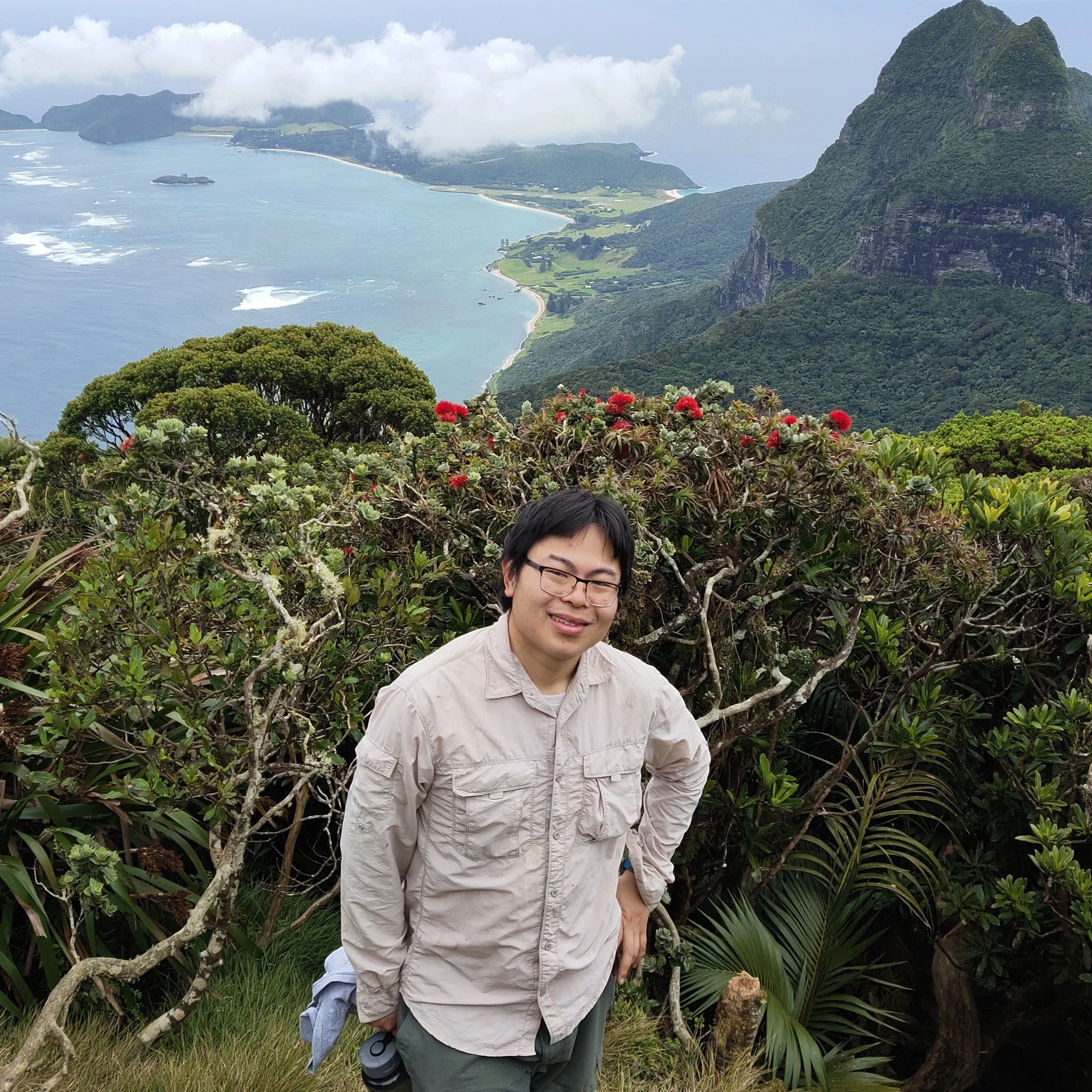
We have been awarded more than $400 000 to develop a model for island invertebrate conservation for Australia using Norfolk Island snails as important case study. This project will compliment Junn Kitt’s PhD research on the conservation of Norfolk Island snails, here’s Junn Kitt living the dream in the photo below! It will also support a new PhD student to work on developing management strategies and ex situ insurance populations! This project is has many partners including the Australian Museum and Taronga Zoo.

Funding announcement here: https://www.westernsydney.edu.au/newscentre/news_centre/more_news_stories/snails_to_the_rescue_linkage_grant_funding_success

Junn Kitt in the field living the dream!!

The full spectrum of tiger moths and harlequin bugs

We are part of a team that successfully secured an ARC Discovery project starting in 2019 which aims to account for variation in warning signals. The team is lead by Marie Herberstein (Macquarie Uni) and includes Nathan Hart (Macquarie Uni), Hannah Rowland (Max Planck), and Johanna Mappes (Uni of Jyvaskyla) and Kate!

Here is our 100 word summary:

Warning colours protect toxic prey from predators who learn to associate the colours with an unpleasant taste. Theoretically, warning colours should not vary, but in nature we find appreciable and unexplained variation. This presents a fundamental and unresolved biological problem - why do warning colours vary? This project will address this significant biological question by investigating how local environmental factors and predator communities affect warning colour expression across the Australian landscape. The project will utilise Australia's excellent environmental and biodiversity informatics infrastructure to inform the public and decision makers about the adaptability of animals to environmental change such as predator loss.

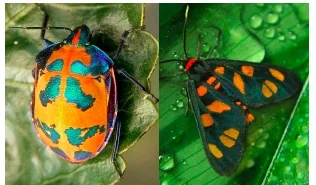
Harlequin bug, Tectocoris diophthalmus (left), tiger moth, Amata annulata (right).Images from: Flickr.com and brisbaneinsects.com

Harlequin bug, Tectocoris diophthalmus (left), tiger moth, Amata annulata (right).

Images from: Flickr.com and brisbaneinsects.com

Our study species featured on the Australian Geographic blog "Creatura" by Bec Crew

We have had two interviews recently by Bec Crew! Check out the stories about two of our study systems here:

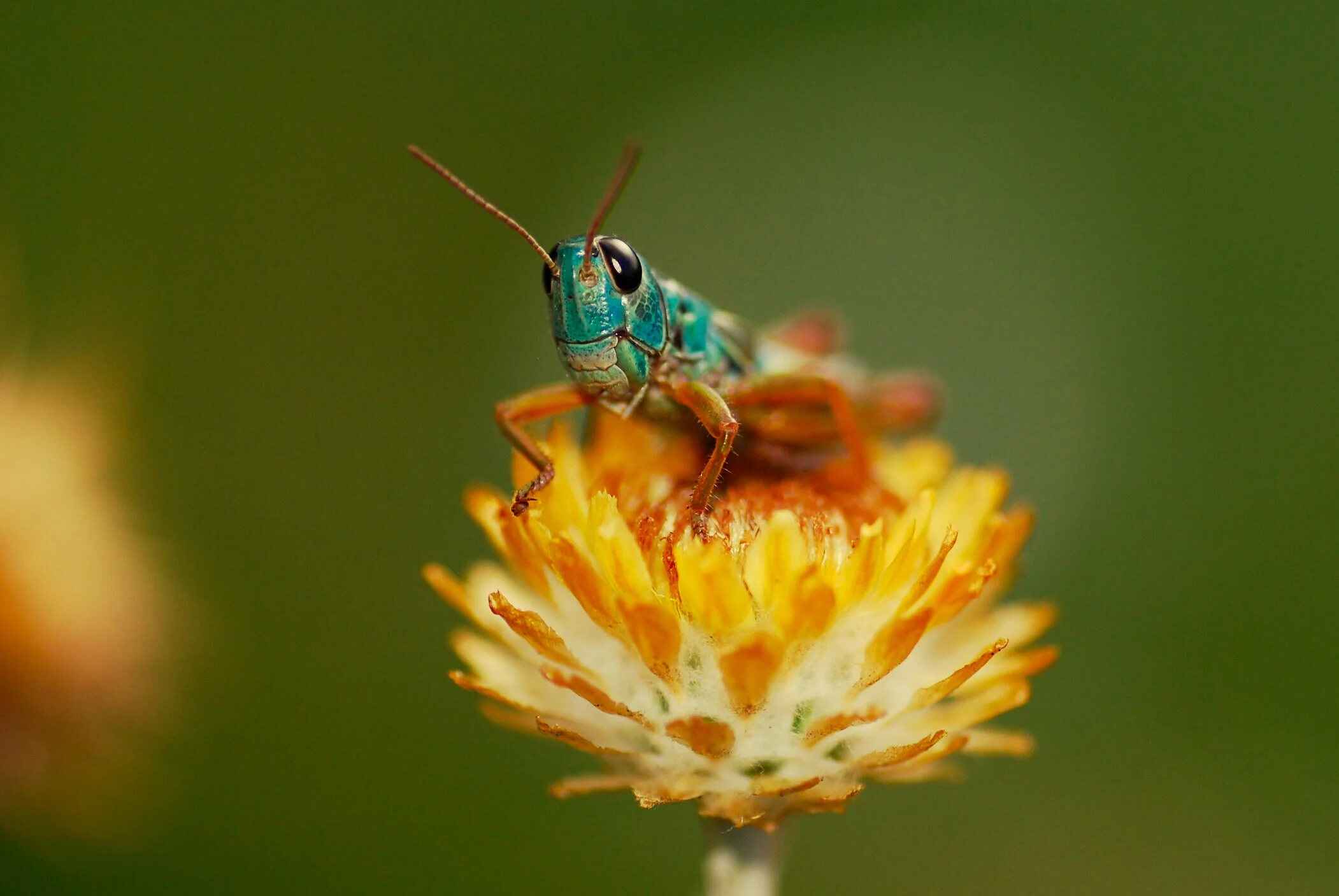
Why so blue? Unravelling colour change in the chameleon grasshopper:

http://www.australiangeographic.com.au/blogs/creatura-blog/2018/07/chameleon-grasshopper

These shocking insects are one of Australia's weirdest insects:

http://www.australiangeographic.com.au/blogs/creatura-blog/2018/04/the-mountain-katydid

Startling ARC Success!

In the most recent funding round, Kate has secured a Discovery Early Career Researcher Award (DECRA)! This is exciting and will provide the opportunity to focus on startle displays for the next 3-4 years. This is the 100 word summary from the grant application:

Startle displays: a new route to resolving the aposematism paradox.

This project aims to propose an empirical evaluation of startle displays as the ‘missing link’ in antipredator defences. The evolutionary origin of warning colouration is considered paradoxical in that conspicuous mutant prey should be attacked and killed as they evolve, denying predators any chance to learn to avoid them. Startle displays, however, are antipredator defences that exploit predator reflexes through a sudden transition from camouflage to warning colouration. This work merges theory on antipredator defences, deepens knowledge of their fitness costs and benefits, and provides a new resolution to a classic evolutionary paradox.

Invertebrate Conservation workshop

We have received a small grant from the Urban Society and Living Theme at Western Sydney Uni to develop a team across Australia and New Zealand to promote the conservation of our endemic species. It's an exciting time as we move deeper into the world of science communication with Dr Tanya Latty, Dr Lizzy Lowe and Dr Chrissie Painting. 

fieldstemminist.jpg